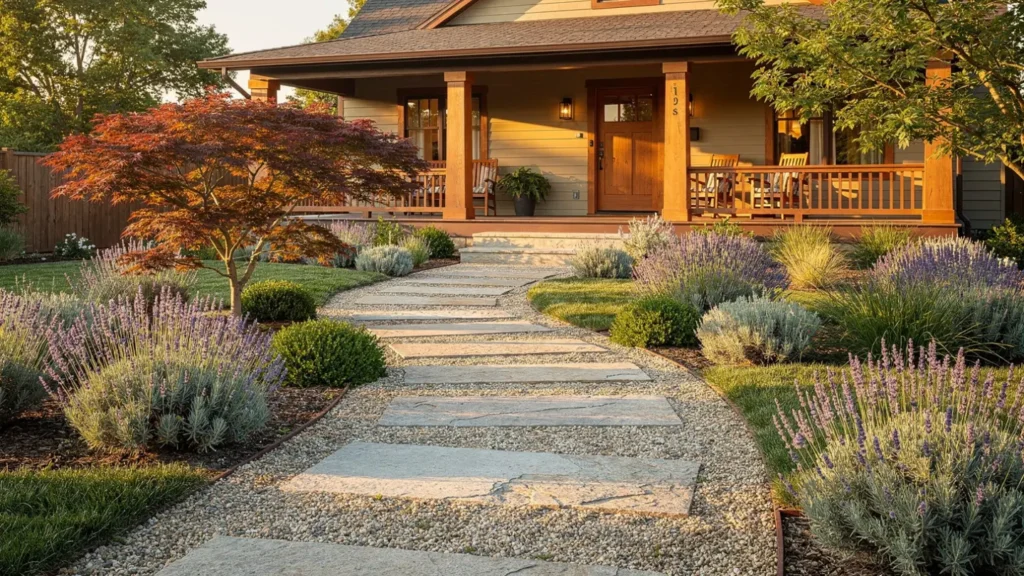
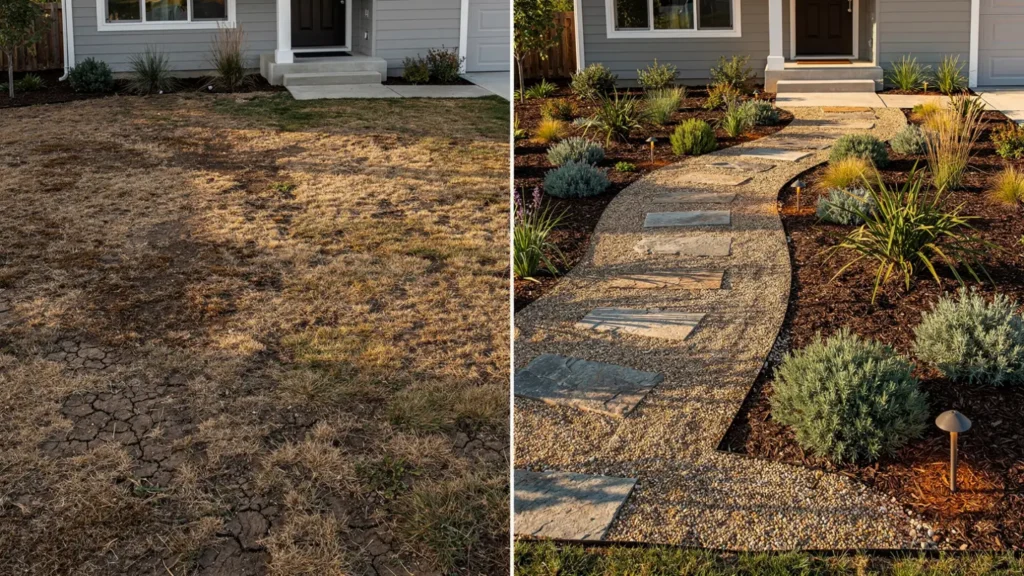
I remember standing in front of my house, staring at a patchy, brown lawn that refused to cooperate no matter how much water or fertilizer I threw at it. A neighbor suggested I look into grass free front yard ideas, and honestly, it changed everything. What I found was a world of lush, low-maintenance designs that actually look more intentional and polished than any traditional lawn ever did.
In this article, I’m going to walk you through 11 real secrets that professional landscape designers use to pull off grass-free front yards that look genuinely luxurious not like you just gave up on grass, but like you made a very deliberate, stylish choice.
Whether you’re dealing with drought restrictions, HOA headaches, or you’re just tired of mowing every weekend, these ideas will give you a solid starting point.
What Does a Grass-Free Front Yard Ideas Actually Mean?
A grass-free front yard simply replaces traditional turfgrass with alternative ground covers, hardscaping, native plants, mulch beds, or a combination of all of these.
Think of it like swapping a plain white wall for a gallery of art. The wall still exists your yard still covers the ground but now it tells a story.
The best grass-free yards don’t look empty. They look curated. And that’s what we’re going for here.
9 Grass-Free Front Yard Landscaping Ideas That Actually Work
1. Use a Gravel or Decomposed Granite Base
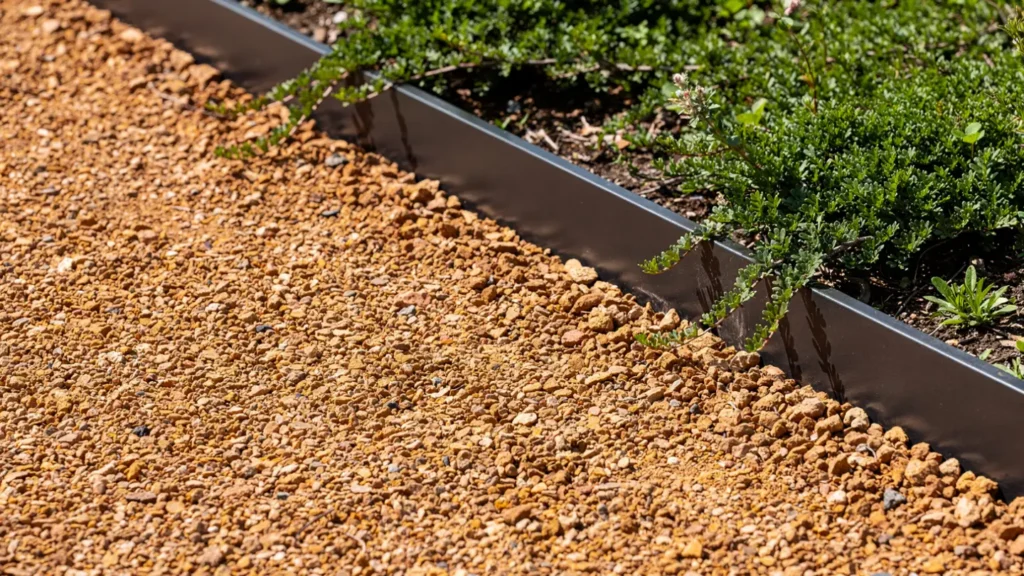
This is one of the most popular choices I’ve personally tested. Decomposed granite (DG) gives your yard a clean, high-end look at a fraction of the cost of pavers. I installed it in my own front walkway area and the difference was immediate.
Lay a weed barrier underneath, edge it with steel or stone borders, and you’ve got a low-maintenance base that lasts for years. It also drains beautifully, which matters a lot in heavy rain areas.
2. Add Native Plants in Clusters, Not Rows
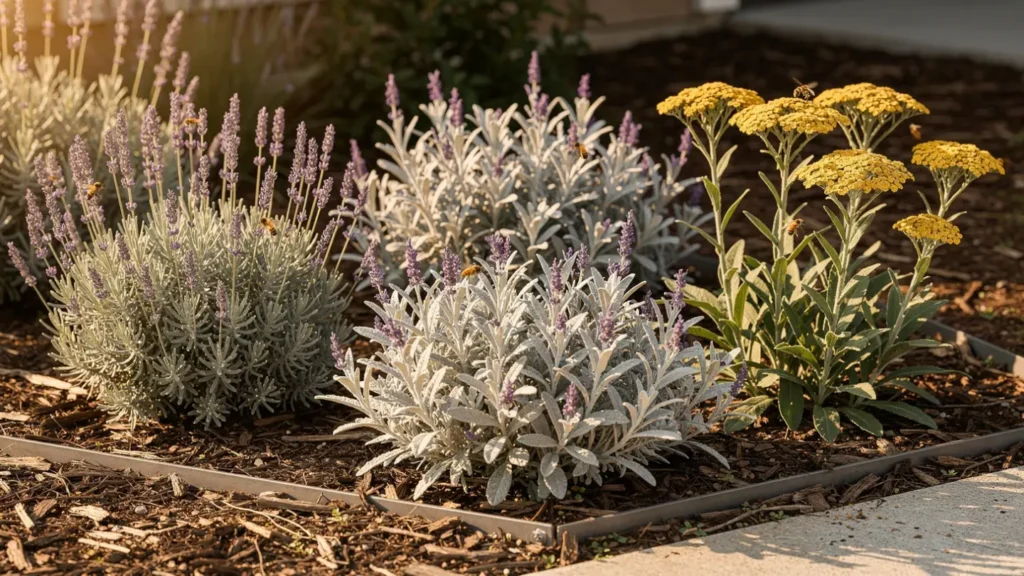
One mistake I made early on was planting things in straight lines. It looked rigid and unnatural. Landscape designers always cluster plants in odd-numbered groups threes, fives, sevens because it mimics how plants grow in nature.
For a grass-free yard, native plants are your best friends. They need less water, attract pollinators, and look stunning year-round. Lavender, ornamental sage, and yarrow are all solid choices depending on your region.
3. Incorporate Flagstone or Concrete Stepping Stones
A well-placed path does two things: it guides visitors to your door, and it adds structure to what could otherwise look like a random collection of plants.
I laid flagstone stepping stones through my front yard and it gave the whole space an organic, walkable feel. Use irregular shapes for a cottage look, or clean rectangular slabs for a more modern aesthetic.
4. Use Mulch Beds With Defined Edges
Sharp, clean mulch bed edges are probably the single biggest secret professional designers use. When the edges are crisp and well-defined, even a simple mulch bed looks expensive.
Use a flat spade or a dedicated edging tool to cut clean lines. I like to re-edge every spring it takes about an hour and completely refreshes the whole yard.
5. Layer Plants by Height
Here’s a design principle I learned from watching a landscape designer work on a project near me: always plant in layers. Tall grasses or shrubs in the back, medium perennials in the middle, and low groundcovers in the front.
This layering creates visual depth and makes the yard look like it was designed, not just planted randomly.
6. Install a Statement Focal Point
Every great front yard has one element that draws the eye. It could be a specimen tree, a large ornamental boulder, a water feature, or even a striking planter by the front door.
When I added a Japanese maple to my front yard design, the whole space clicked into place. It gave everything else something to revolve around.
7. Try Drought-Tolerant Groundcovers
Creeping thyme, sedum, and ice plant are groundcovers that spread like a lawn but need almost no maintenance. What surprised me was how fast creeping thyme established itself within one growing season, it had filled in gaps I didn’t expect.
These work especially well in sunny spots where grass tends to burn out anyway.
8. Add Texture Through Varied Plant Foliage
Color isn’t the only way to create visual interest. Texture matters just as much, especially in the off-season when flowers aren’t blooming.
Mix fine-textured plants like ornamental grasses with bold-leaved plants like agave or hosta. That contrast keeps the yard looking interesting even on a gray November day.
9. Use Lighting to Extend the Design Into Evening
Solar-powered path lights and small uplights are inexpensive and dramatically improve how a yard looks at night. I added a few uplights under my focal tree and suddenly the yard looked like it belonged in a design magazine.
Low-voltage LED lights are energy efficient, easy to install, and they create a warm, welcoming glow that no lawn could ever achieve.
10. Define Zones With Hardscaping
Even without grass, a yard needs structure. Use pavers, gravel paths, or low garden walls to divide the space into clear zones a planting area here, a sitting area there, a pathway connecting them.
This is the design principle that separates “messy” from “intentional.” Without zones, a grass-free yard can look like an overgrown garden. With them, it looks designed.
11. Choose a Consistent Color Palette
Professional designers almost always limit a front yard to two or three plant colors plus foliage. When I started pulling too many colors together, things got busy fast.
Pick a palette say, silver, white, and purple and stick with it. You’ll be amazed how cohesive and luxurious it looks compared to a random mix of whatever was on sale at the nursery.
Common Mistakes People Make With Grass-Free Yards
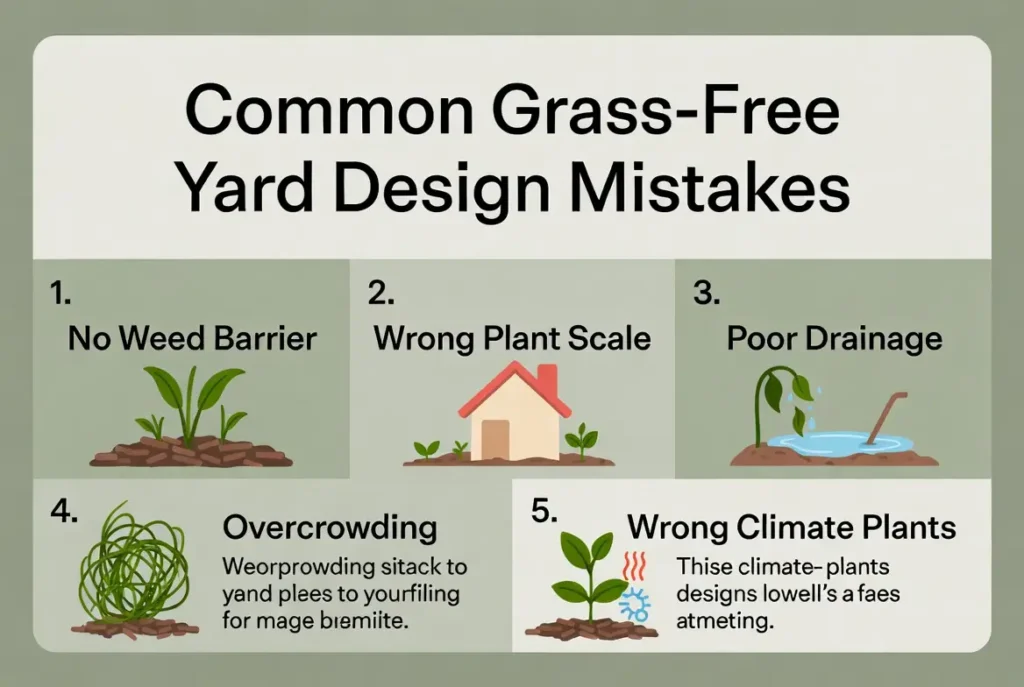
- Skipping the weed barrier — I made this mistake in my first attempt. Within six weeks, weeds had completely taken over my gravel area. Always lay landscape fabric under gravel or mulch.
- Planting without scale in mind — A shrub that looks tiny in a pot can grow to six feet wide. Always research mature plant sizes before you buy.
- Ignoring drainage — Hardscape-heavy yards can cause water to pool near the foundation. Always slope hardscape away from the house and add drainage channels where needed.
- Overcrowding plants — More is not more when it comes to planting. Give each plant room to breathe or you’ll spend years thinning things out.
- Using plants not suited to the climate — This one cost me real money. I fell in love with a plant at the nursery, bought four of them, and watched them all die over winter. Always check hardiness zones first.
Practical Tips to Get Better Results
- Start with a plan on paper — Even a rough sketch helps you figure out proportions, paths, and planting zones before you spend any money.
- Install edging first — Clean borders make everything look more professional and prevent mulch and gravel from migrating into your neighbor’s yard.
- Choose plants in odd numbers — Groups of three or five look more natural than twos or fours.
- Water new plants consistently for the first season — Even drought-tolerant plants need consistent moisture while they establish roots.
- Revisit your design each spring — Trim edges, refresh mulch, and replace any plants that didn’t survive winter. Maintenance is part of the design.
- Take photos throughout the seasons — This helps you see what’s working and what isn’t, and it’s incredibly satisfying to look back at how far your yard has come.
Replacing grass doesn’t have to mean sacrificing beauty or curb appeal. In my experience, the grass-free yards I’ve designed and lived in have been far easier to maintain and far more interesting to look at than any traditional lawn.
If you’re just starting out, pick one corner of your yard and try one or two of these ideas. You don’t have to do it all at once. Small changes add up quickly.
If you want to read 21 Budget-Friendly Ways to Create a Cozy Outdoor Space for Your Mobile Home click here.
If you give any of these grass free front yard ideas a try, I’d love to hear what worked for you. Drop your experience in the comments.