When I first started dabbling in landscape design, I often found myself staring at my front yard, wondering why some layouts just felt right, while others, despite my best efforts, looked… off. It wasn’t until I stumbled upon the concept of the golden ratio front yard design that everything clicked. This isn’t some abstract mathematical theory; it’s a powerful tool that can transform your outdoor space into a harmonious, visually appealing masterpiece. In my experience, understanding and applying the golden ratio can elevate a good design to a truly perfect one.
In this article, I’ll share my journey and practical insights into using the golden ratio for your front yard. You’ll learn what it is, why it works, and discover 12 actionable design ideas that you can implement immediately. Get ready to create a landscape that not only looks stunning but also feels incredibly balanced and inviting.
What Is the Golden Ratio and Why It Matters for Your Front Yard?
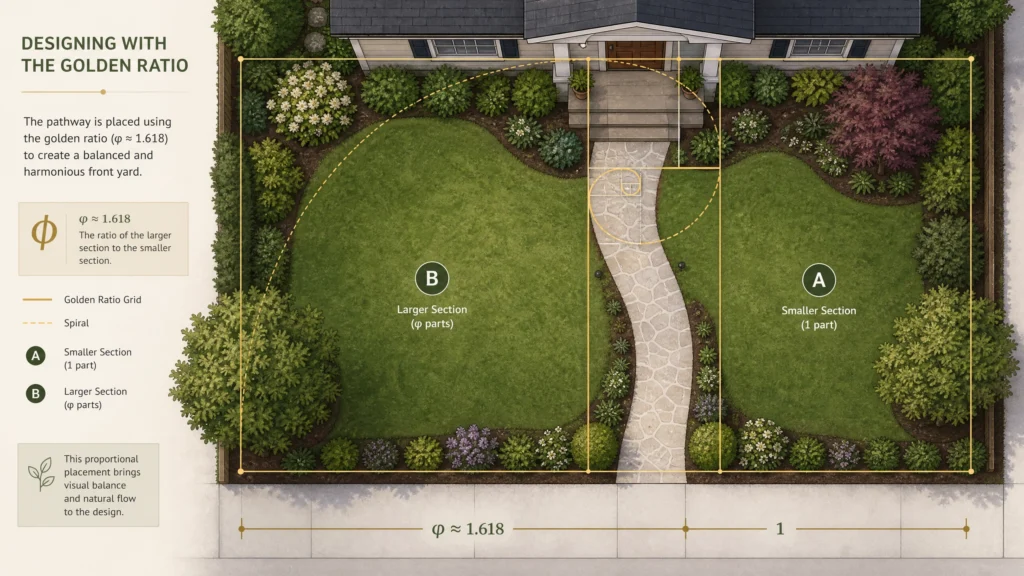
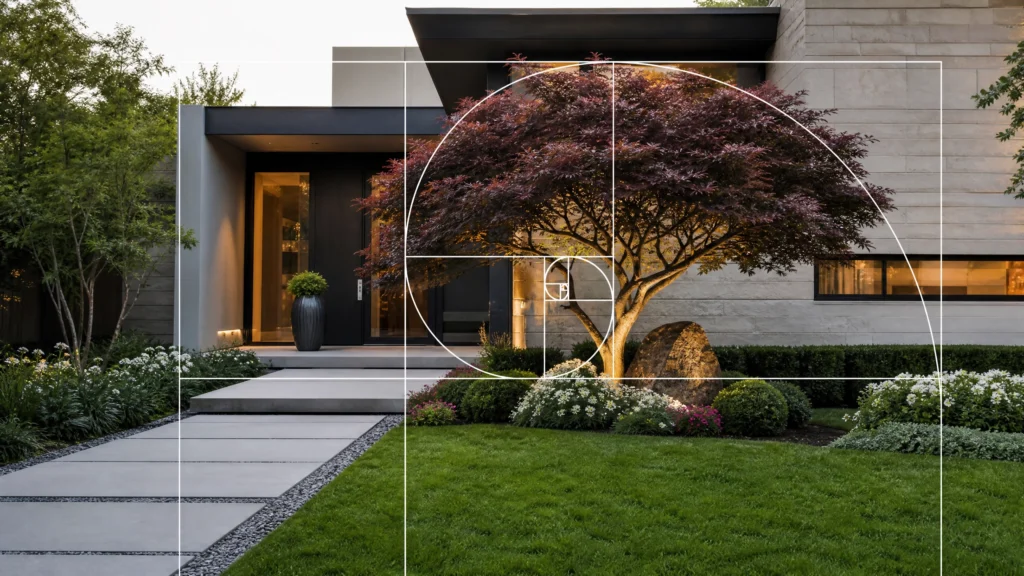
Honestly, when I first heard about the golden ratio, I thought it sounded overly academic. But here’s the thing: it’s surprisingly intuitive. The golden ratio, often represented by the Greek letter phi (Φ) and approximately equal to 1.618, is a mathematical proportion found throughout nature and art. Think of a nautilus shell, the spirals of a sunflower, or even the proportions of the human face – the golden ratio is often at play, creating a sense of natural balance and beauty.
In my experience, applying this ratio to your front yard means creating divisions and relationships between elements that are visually pleasing. It’s about ensuring that the different parts of your landscape – the lawn, flower beds, pathways, and focal points – relate to each other in a way that feels inherently harmonious. It’s not about rigid rules, but about guiding principles that lead to a more aesthetically satisfying outcome. What surprised me was how much of a difference it made in how a space felt, not just how it looked.
12 Golden Ratio Front Yard Design Ideas for a Perfect Landscape Layout
Now, let’s dive into the practical application. I’ve tested and refined these ideas over time, and they consistently deliver stunning results. Remember, these aren’t strict blueprints, but inspirations to help you apply the golden ratio principles to your unique space.
1. The 1.618 Rule for Garden Beds
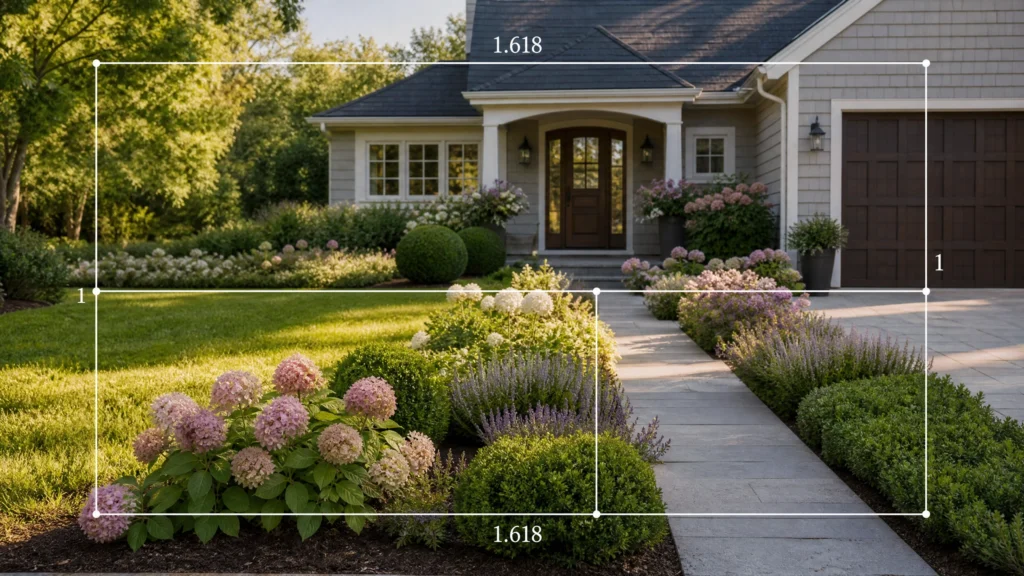
When designing your flower beds, try to make one dimension roughly 1.618 times the other. For instance, if your bed is 10 feet long, aim for a width of about 6.18 feet. This creates a visually balanced shape that feels natural and expansive. I’ve found this simple trick instantly elevates the perceived professionalism of a garden.
2. Pathway Placement with Purpose
Instead of centering your pathway, consider offsetting it using the golden ratio. If your front yard is 30 feet wide, place your pathway about 11.45 feet from one side, leaving 18.55 feet on the other. This creates a more dynamic and inviting entrance, drawing the eye through the landscape rather than just to the front door. It’s a subtle change, but it makes a huge difference.
3. Focal Point Positioning
Position your main focal point – perhaps a striking tree, a water feature, or a sculpture – at a golden ratio intersection. Imagine dividing your yard into a grid based on the golden ratio. Placing your key element where these lines cross creates an undeniable visual magnet. I once placed a bird bath using this principle, and it became the undisputed star of the garden.
4. Layering Plants for Depth
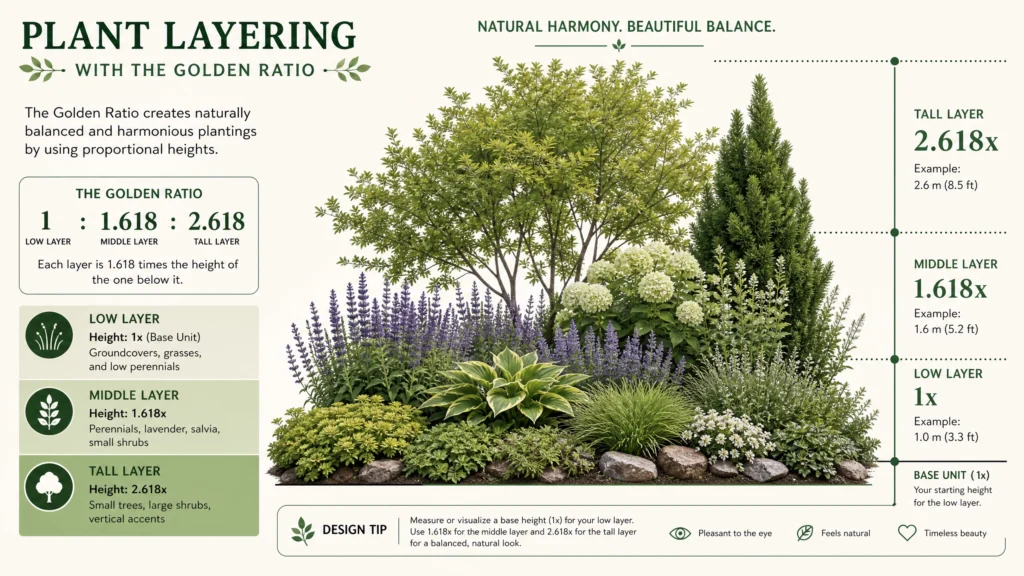
When layering plants, aim for heights that follow the golden ratio. For example, if your tallest plants are 5 feet, your mid-height plants could be around 3.09 feet, and your shortest ground cover around 1.91 feet. This creates a natural progression and depth that feels organic and lush. It’s like nature’s own tiered wedding cake.
5. Hardscaping Harmony
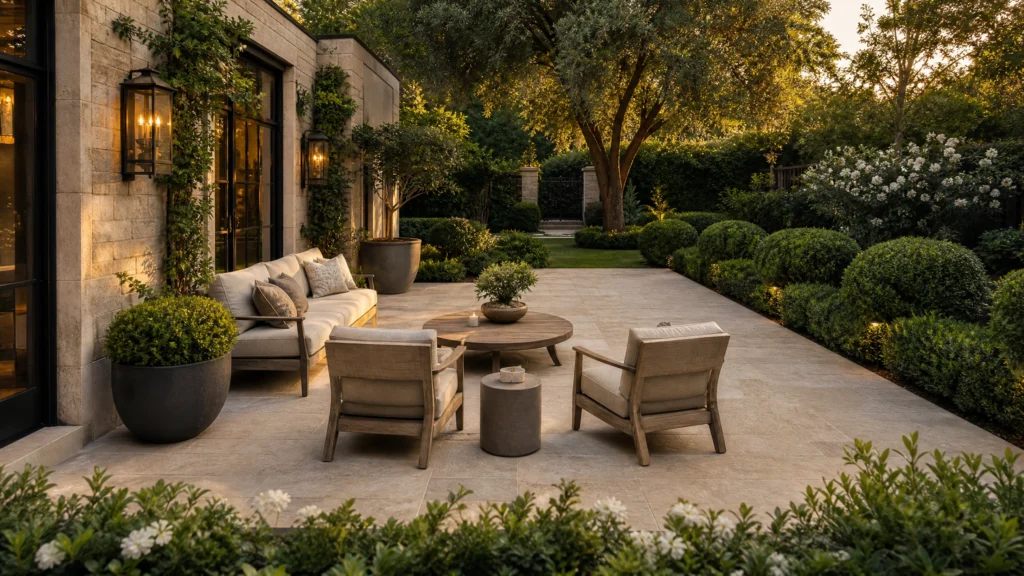
Apply the golden ratio to your hardscaping elements like patios or seating areas. If you’re building a rectangular patio, make its length approximately 1.618 times its width. This proportion is inherently pleasing to the eye and makes the space feel more intentional and well-designed. I’ve seen countless patios transformed by this simple adjustment.
6. The Golden Spiral in Planting
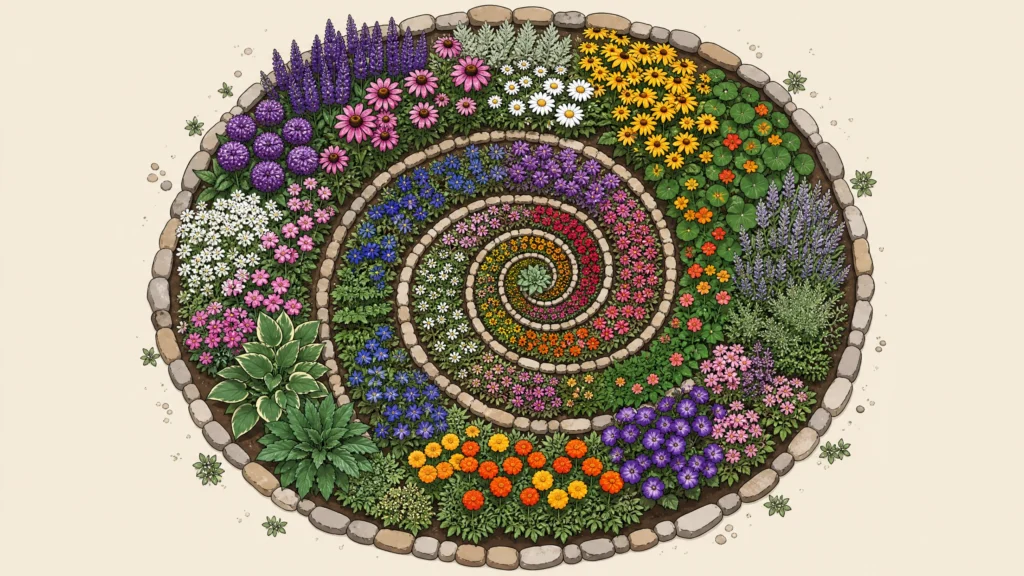
Consider using the golden spiral for your planting arrangements, especially in circular or curved beds. Start with a central point and arrange plants in an outward spiral, with the density or size of plants increasing as you move further out. This mimics natural growth patterns and creates a captivating, dynamic display. It’s a bit more advanced, but the results are breathtaking.
7. Window Box Wonders
For window boxes, ensure the length of the box is roughly 1.618 times the height of the plants within it. This creates a balanced display that complements your home’s architecture without overwhelming it. I’ve found this makes window boxes look less like an afterthought and more like an integral part of the design.
8. Driveway Dividers
If you have a wide driveway, consider dividing the space with a planting strip or decorative element that adheres to the golden ratio. For example, if your driveway is 20 feet wide, a planting strip of about 7.64 feet wide, leaving 12.36 feet for the driving surface, can add significant curb appeal. It breaks up the monotony and adds visual interest.
9. Fence and Wall Proportions
When building or choosing fences and walls, pay attention to their proportions. A fence panel that is 1.618 times wider than it is tall, or vice versa, will look more aesthetically pleasing. This applies to individual sections as well as the overall length-to-height ratio of a retaining wall. It’s about creating architectural harmony.
10. Water Feature Placement
Similar to focal points, place water features at a golden ratio intersection within your yard. The sound and movement of water naturally draw attention, and positioning it strategically amplifies its impact. I once moved a small pond just a few feet based on this principle, and it completely changed the feel of the entire garden.
11. Grouping Container Plants
When grouping container plants, arrange them in clusters where the height of the tallest plant, the width of the grouping, or the overall visual mass follows the golden ratio. For example, a tall plant, a medium plant, and a short plant arranged in a 1:1.618:2.618 height ratio can create a stunning vignette. It’s like creating a mini-landscape in pots.
12. The Golden Rectangle for Lawn Areas
Shape your main lawn area into a golden rectangle, where the length is approximately 1.618 times the width. This creates a classic, balanced expanse of green that serves as a perfect backdrop for your other design elements. It’s the foundation upon which all other golden ratio principles can be built. I’ve found this makes even small lawns feel more expansive and thoughtfully designed.
Common Mistakes People Make
Honestly, I’ve made almost all of these mistakes myself when I first started. Learning from them is part of the journey to a truly beautiful front yard.
1. Ignoring Scale and Proportion
One of the biggest errors is simply not considering how elements relate to each other in size. A tiny bird bath in a massive lawn looks lost, and an enormous shrub next to a small porch can feel overwhelming. I made this mistake by planting a fast-growing tree too close to my house, and it quickly dwarfed everything around it. Always step back and assess the overall scale.
2. Over-Complicating the Design
Sometimes, in an effort to make a yard interesting, people add too many different elements without a cohesive plan. This leads to a cluttered, chaotic look. I once tried to incorporate every plant I loved into one bed, and it ended up looking like a botanical free-for-all. Simplicity and clear focal points are key.
3. Forgetting About Flow and Movement
A front yard should guide the eye and invite movement. If pathways are awkward or planting beds block views, the design feels disjointed. I learned this the hard way when a winding path I designed ended abruptly, leaving visitors unsure where to go next. Ensure there’s a natural flow from one area to the next.
4. Neglecting Seasonal Interest
Focusing only on how a yard looks in one season is a common oversight. A beautiful spring display can turn into a barren wasteland in winter. I used to plant only spring-blooming flowers, and my yard looked quite sad for the rest of the year. Plan for year-round appeal with a mix of evergreens, varied textures, and staggered bloom times.
5. Not Considering Maintenance
An elaborate design with high-maintenance plants can quickly become a burden. I once designed a complex formal garden that required constant pruning and care, and I quickly became overwhelmed. Be realistic about the time and effort you’re willing to put in, and choose plants and features accordingly.
Practical Tips to Get Better Results
Based on my years of trial and error, here are some actionable tips that will help you achieve that perfect golden ratio front yard.
1. Start with a Sketch
Before you dig, sketch out your ideas. Use graph paper or an online design tool to map out your yard and experiment with different layouts. This allows you to play with proportions and visualize the golden ratio in action without any physical effort. It’s a game-changer for planning.
2. Use Temporary Markers
Once you have a plan, use stakes, string, or even a garden hose to outline your beds, pathways, and focal points in your actual yard. This helps you see the proportions in real-time and make adjustments before committing. I always do this; it prevents so many costly mistakes.
3. Observe Your Space
Pay attention to how sunlight moves across your yard throughout the day and across seasons. Note existing features, views, and problem areas. Understanding your site’s unique characteristics is crucial for a successful design. I’ve found that observing for a full year gives the best insights.
4. Think in Layers
Don’t just think about plants in a single row. Plan for different heights, textures, and colors to create depth and interest. This layering effect is where the golden ratio truly shines, creating a rich and immersive landscape. It’s like painting with plants.
5. Create a Master Plant List
Research plants that thrive in your climate and soil conditions, and consider their mature size, bloom time, and maintenance needs. A well-chosen plant palette makes all the difference. I always prioritize native plants for their resilience and ecological benefits.
6. Don’t Be Afraid to Edit
Landscape design is an ongoing process. If something isn’t working, don’t be afraid to move plants, reshape beds, or even remove elements. My own front yard has evolved significantly over the years through continuous refinement. It’s your space; make it perfect for you.
Read more Ornamental Grass Landscaping Ideas: 9 Stunning Ways
If you’re ready to transform your front yard into a harmonious and beautiful space using the golden ratio, I encourage you to try out some of these ideas. It’s a journey of observation, planning, and a little bit of mathematical magic. I’d love to hear about your experiences and what works best for your landscape in the comments below. Happy gardening!