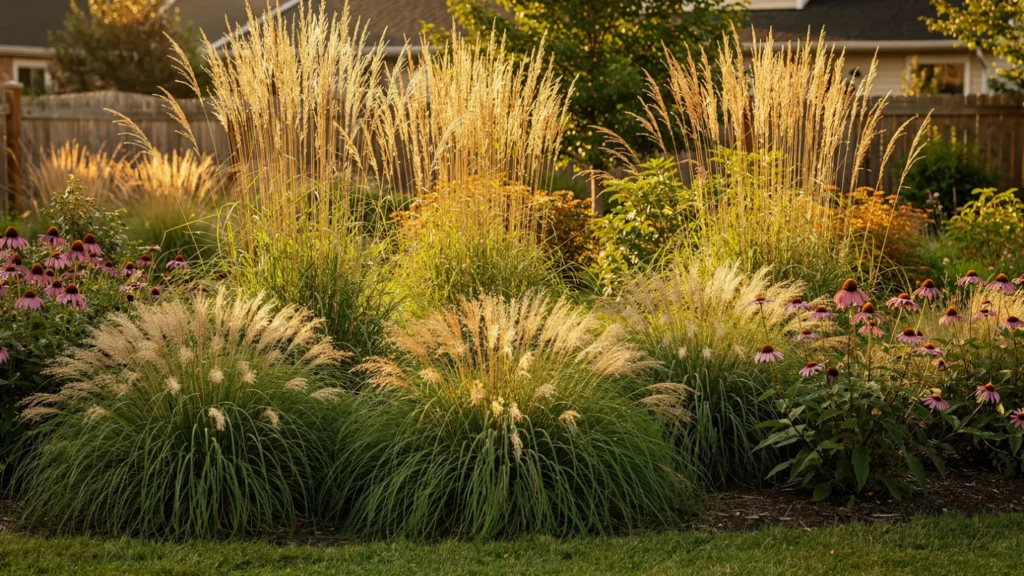
A few years ago, I was standing in my backyard staring at the most boring garden you could imagine — flat lawn, a few generic shrubs, nothing memorable. Then I came across ornamental grass landscaping ideas online and decided to experiment with a single clump of Karl Foerster feather reed grass along my fence line. Within one growing season, that single plant had become the most talked-about feature of my entire yard.
Since then, I’ve used ornamental grasses in nearly every project I’ve tackled — front yards, backyard borders, container gardens, and even narrow side yards people thought were hopeless. And every single time, the transformation has been dramatic.
Here’s what I’ve learned: ornamental grasses aren’t just filler plants. When you use them intentionally, they add movement, texture, seasonal color, and a sense of natural elegance that almost no other plant can match. Let me walk you through nine specific ways to use them that actually work.
What Are Ornamental Grasses ideas and Why Do They Work So Well?
Ornamental grasses are decorative, non-turf grass varieties grown for their visual impact rather than as a lawn surface. Unlike standard lawn grass, they come in dozens of shapes, sizes, and textures — from fine and feathery to bold and upright.
Think of them as the equivalent of a well-placed accent chair in a living room. You don’t need many. But the right one in the right spot can completely anchor a space and tie everything else together.
They’re also incredibly practical. Most ornamental grasses are drought-tolerant, low-maintenance, and deer-resistant. They look good in spring, summer, AND fall — which is more than most flowering perennials can say.
9 Ways to Use Ornamental Grass Landscaping Ideas in Your Yard
1. Use Tall Grasses as a Privacy Screen
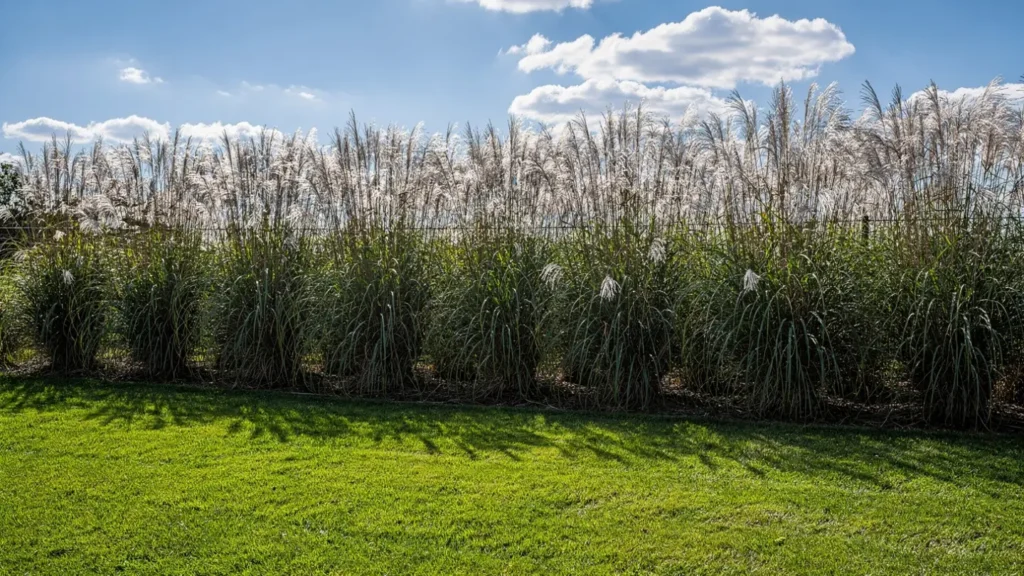
Miscanthus sinensis — also called eulalia or maiden grass — can reach 6 to 8 feet tall, creating a natural, swaying privacy screen that looks infinitely better than a solid fence. I planted a row of it along my back property line and it transformed a very exposed space into a cozy, private retreat.
For best results, plant in a staggered double row rather than a single line. This fills in gaps and looks more natural.
2. Create Movement With a Border Planting
One of the most underrated things ornamental grasses do is move. Even a light breeze sets them swaying, and that gentle, rippling motion adds life to what would otherwise be a static garden bed.
I planted a long border of Pennisetum alopecuroides (fountain grass) along my front walkway. Every time the wind picks up, the whole border ripples like water. Visitors always comment on it.
3. Add a Specimen Grass as a Focal Point
Just like a specimen tree, a single dramatic grass clump can serve as a garden focal point. Pampas grass, giant miscanthus, or blue oat grass work beautifully in this role.
What surprised me was how effective a single well-placed clump could be. I dropped one large Miscanthus “Gracillimus” at the corner of my patio and it immediately gave the whole space a sense of structure.
4. Mix Grasses With Perennials for a Prairie Look
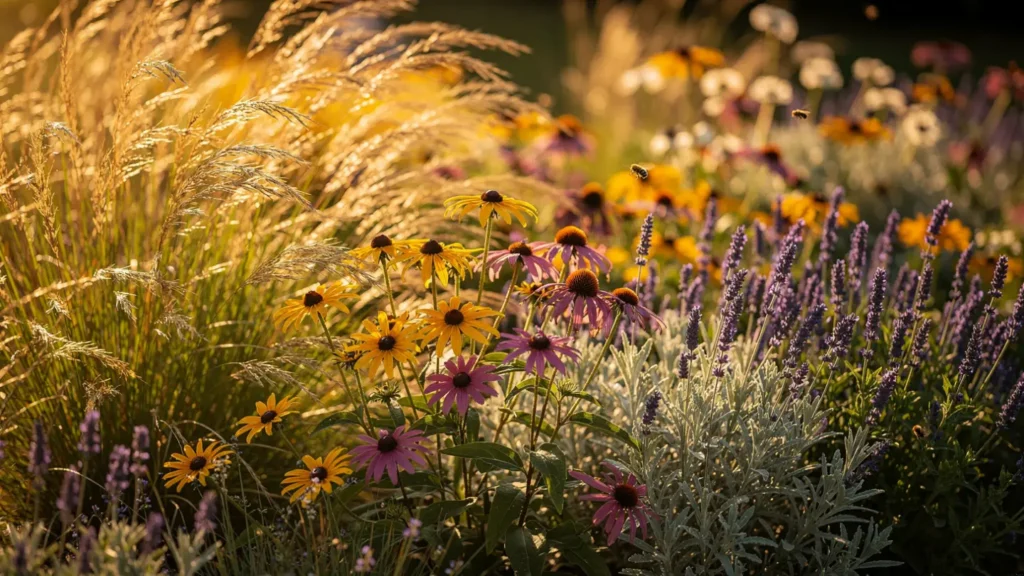
The naturalistic planting style — inspired by the American prairie — mixes ornamental grasses with flowering perennials like black-eyed Susans, coneflowers, and salvia. The result is a wild, romantic landscape that looks effortless but intentional.
I tried this in my side yard after seeing it in a book about Dutch landscape designer Piet Oudolf. The combination of feather reed grass, coneflowers, and Russian sage looked genuinely breathtaking by midsummer.
5. Use Low Grasses as a Ground Cover Alternative
Blue fescue, black mondo grass, and sedges make excellent groundcovers for areas where traditional grass struggles — shady spots, sloped areas, or anywhere with poor soil.
I used blue fescue in a gravelly, sun-baked strip alongside my driveway where nothing else would grow. Within one season, it had filled in beautifully with its distinctive steel-blue color.
6. Plant in Containers for Instant Impact
You don’t need a full garden bed to enjoy ornamental grasses. A single dramatic grass in a large container can completely transform a patio, deck, or entryway.
I’ve done this with Japanese forest grass (Hakonechloa macra) in glazed blue pots — the golden, arching foliage against the blue container is genuinely stunning and gets compliments every single time.
7. Create Winter Interest With Seed Heads
Here’s something most beginners don’t realize: many ornamental grasses look their absolute best in late fall and winter, when their seed heads and dried foliage catch frost, snow, and low winter light.
I used to cut everything down in October. A landscape designer friend convinced me to leave my grasses standing through winter — and I’m so glad I listened. The way frost clings to a clump of Karl Foerster grass on a cold morning is genuinely beautiful.
8. Use Grasses to Define Zones Without Hardscaping
Instead of building a wall or installing a fence, a dense mass planting of ornamental grass can visually separate areas of your yard — creating distinct zones without permanent structure.
I used a line of muhly grass to separate my patio area from a vegetable garden zone. It’s soft, it sways in the breeze, and it achieves the visual separation without making either space feel closed in.
9. Layer Grasses for Textural Contrast
When you layer multiple grass varieties by height and texture, the result is a rich, tapestry-like planting that looks incredibly sophisticated. The key is contrast — fine textures next to bold ones, upright forms next to arching ones.
My most successful layered grass planting uses tall Karl Foerster in the back, medium-height fountain grass in the middle, and fine-textured blue fescue at the front edge. Three plants, three textures, three heights — and it looks like professional work.
Common Mistakes People Make With Ornamental Grasses
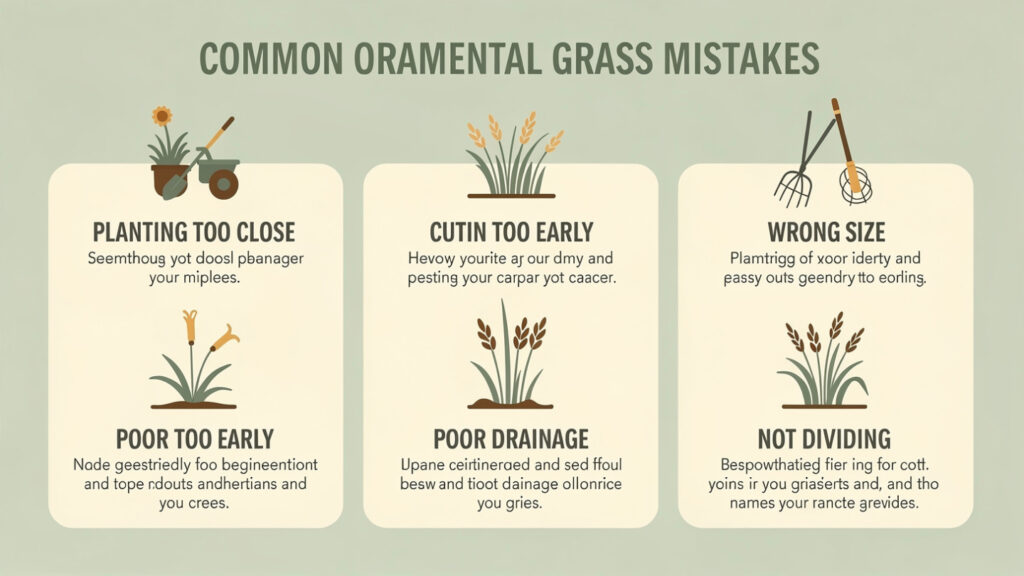
- Planting too close to walkways — Most ornamental grasses spread significantly wider than their label suggests. I had to dig up and relocate three plants because they were blocking my path within two years.
- Cutting them down too early — Leaving grasses standing through fall and winter provides habitat for birds and incredible visual interest. I used to cut mine in October; now I wait until late February or early March.
- Choosing the wrong size for the space — A 10-foot pampas grass does not belong in a small suburban front yard. Always research mature size and match it to the scale of your space.
- Ignoring soil drainage — Most ornamental grasses hate soggy soil. I lost a beautiful stand of miscanthus because I planted it in a spot with poor drainage. Check drainage before you plant.
- Not dividing them regularly — Many ornamental grasses die out in the center after 3 to 5 years if not divided. I learned this the hard way with a large fountain grass clump that developed an ugly dead center. Divide every few years to keep them full and healthy.
Practical Tips to Get Better Results With Ornamental Grasses
- Research your climate zone first — Some ornamental grasses are invasive in certain regions. Always check whether your chosen variety is appropriate for your area before purchasing.
- Plant in spring or early fall — These windows give roots time to establish before the stress of summer heat or winter cold. My spring-planted grasses always establish faster than my fall ones.
- Water consistently for the first season — Even drought-tolerant grasses need regular moisture while establishing their root systems. After year one, most can handle dry spells on their own.
- Group odd numbers together — Three, five, or seven plants of the same variety in a mass planting always looks better than a single specimen or an even-numbered group. This mirrors how plants grow naturally.
- Deadhead sparingly — Unlike many flowering perennials, ornamental grasses generally don’t need deadheading. Let the seed heads develop — they add a beautiful, natural texture through fall and winter.
- Mulch the base — A 2 to 3 inch layer of mulch helps retain soil moisture, regulate temperature, and suppress weeds around new plantings.
Read more 12 Creative Backyard Escape Ideas to Make Your Outdoor Space Feel More Private
Ornamental grasses have a way of making everything around them look better. They add height where gardens feel flat, movement where things feel static, and texture where everything blurs together. And the best part? They pretty much take care of themselves once established.
If I had to pick just one place to start, I’d say grab a single clump of Karl Foerster feather reed grass and put it somewhere you look at every day. Give it one season and you’ll see exactly what all the fuss is about.
Have you tried any of these ornamental grass landscaping ideas in your own yard? I’d love to hear what you’re working with — drop a comment below and let’s talk plants.